
By Patrick Cooney, for AMRC
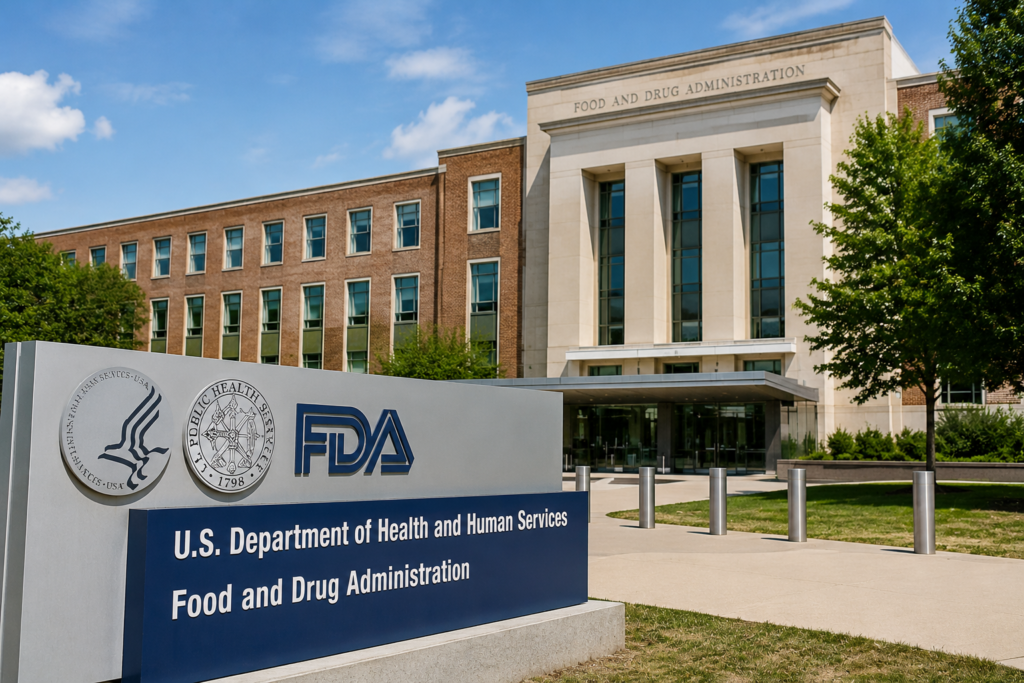
Illustrative image generated using AI.
FEDERAL AGENCY NEWS
FDA Seeks Input on Real-Time Clinical Trial Pilot Program
On April 28, 2026, the U.S. Food and Drug Administration (FDA) announced two major steps forward in its effort to modernize clinical research through real-time clinical trials (RTCTs), signaling what could be a significant shift in how drug development programs are conducted and monitored. The agency unveiled the successful launch of two proof-of-concept RTCT studies and simultaneously released a Request for Information (RFI) seeking stakeholder input on a broader RTCT pilot program expected to begin later this summer. The initiative reflects the FDA’s growing focus on leveraging artificial intelligence, advanced analytics, and real-time data sharing to reduce delays in clinical development and improve regulatory efficiency.
According to the FDA, traditional clinical trial models often involve lengthy delays between when data are generated at research sites and when they are analyzed and submitted to regulators. FDA Commissioner Marty Makary stated that the agency is working toward a more modern system in which FDA scientists can monitor safety signals and efficacy endpoints in real time as trials progress. The agency believes this approach could accelerate regulatory decision-making, reduce inefficiencies in drug development, and ultimately support the broader goal of creating “continuous” clinical trials that minimize delays between development phases.
The FDA also announced the successful initiation of two RTCT proof-of-concept studies. AstraZeneca is conducting the Phase 2 TRAVERSE trial in treatment-naïve mantle cell lymphoma patients, with participation from The University of Texas MD Anderson Cancer Center and the University of Pennsylvania. Amgen is conducting the Phase 1b STREAM-SCLC trial in limited-stage small cell lung carcinoma patients. FDA officials indicated the agency has already received and validated real-time signals from AstraZeneca’s trial through Paradigm Health, demonstrating the technical feasibility of continuous signal sharing between sponsors and regulators. Chief AI Officer Jeremy Walsh described the initiative as potentially “transformative” for the clinical trials ecosystem and emphasized the importance of accelerating access to promising therapies for patients.
For AMRC members and the broader multisite clinical research community, the initiative may represent an important evolution in trial operations, oversight, and data infrastructure. Real-time clinical trials could significantly alter how sponsors, research sites, and regulators interact during early-phase studies, particularly in areas such as safety monitoring, protocol adaptation, and operational decision-making. The FDA’s newly released RFI seeks stakeholder feedback on pilot program design, implementation, evaluation metrics, and success criteria, with comments due by May 29, 2026. FDA expects to release final pilot selection criteria in July and complete selections in August, making this a key area for clinical research organizations and trial sponsors to monitor closely over the coming months.
CAPITOL HILL NEWS
Clinical Trial Reform in Congress
On May 14, 2026, Rep. Jake Auchincloss (D-MA) announced he is positioning the next Prescription Drug User Fee Act (PDUFA) reauthorization, expected in 2027, as a vehicle for bipartisan clinical trial modernization legislation aimed at making the U.S. research system faster, more efficient, and more integrated into routine patient care. Congressional groundwork on the proposal is already underway, with the goal of advancing legislative text before formal PDUFA negotiations begin next year. According to Auchincloss, clinical trial reform represents one of the few areas of meaningful bipartisan agreement in health policy, particularly as lawmakers confront rising development costs, slow trial timelines, limited patient access, and increasing global competition from countries such as China.
A draft legislative framework would establish a broad “Cures in Care Initiative” designed to expand clinical research beyond traditional academic medical centers and into community-based health care settings. The proposal would reportedly leverage FDA’s Center for Clinical Trial Innovation Hub as the lead coordinating entity within HHS to help develop scalable point-of-care trial networks across health systems and research organizations. For AMRC members, the initiative reflects growing federal interest in decentralized and integrated research models that could create new opportunities for multisite clinical research organizations and community-based trial infrastructure.
The proposal also contains several provisions likely to be closely watched by the clinical research community, including efforts to accelerate FDA acceptance of alternative preclinical tools such as laboratory-based models, computational simulations, and non-animal testing methodologies. Another notable provision would establish a pilot program allowing qualified third parties to oversee certain lower-risk Phase 1 clinical trials under an FDA-defined framework, signaling congressional interest in reducing regulatory bottlenecks for early-stage research. Additional provisions would codify FDA’s Rare Disease Innovation Hub, strengthen the development of clinical outcome assessments, encourage earlier sponsor engagement to avoid trial delays, and streamline aspects of the competitive generics and biosimilars pathways.
The broader initiative aligns with recent FDA modernization efforts championed by former FDA Commissioner Marty Makary, including the agency’s new real-time clinical trials initiative intended to improve earlier monitoring of safety and effectiveness during product development.
